For most Ontarians, Blue Mountain and Collingwood are nearly synonymous with skiing. The resort has been the province's primary ski destination for decades, drawing day-trippers from Toronto, weekend visitors from across southern Ontario, and a growing number of people who have chosen to live in the area year-round specifically because of the mountain access. It is not the Rockies, and nobody pretends it is. But for a ski hill that sits less than two hours from the GTA, Blue Mountain delivers a consistently good experience.
The combination of the mountain itself, the village at its base, and the broader winter community in Collingwood makes the area more than just a place to ski. It is a winter destination, with dining, shopping, and evening entertainment that extend the day well beyond last chair.
Blue Mountain Resort
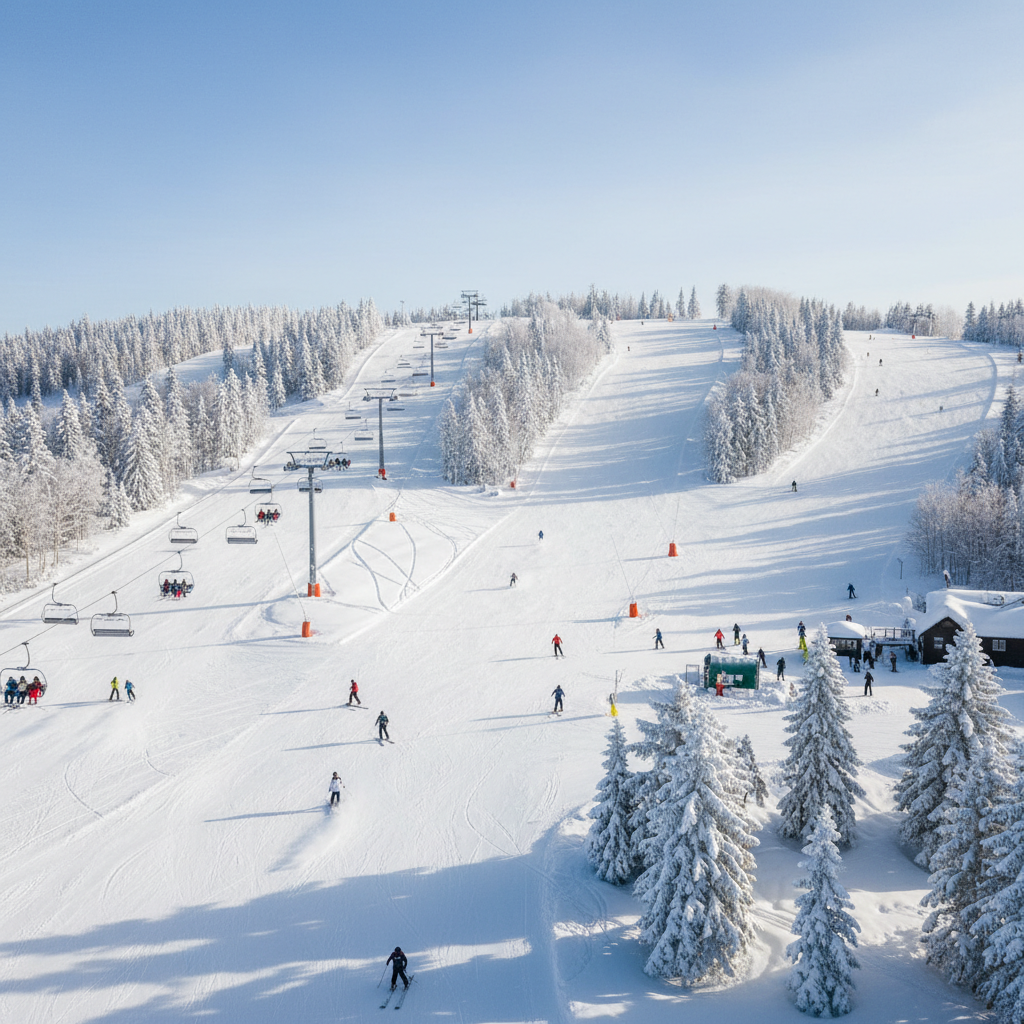
Blue Mountain Resort sits on the Niagara Escarpment overlooking Georgian Bay, about 10 minutes west of downtown Collingwood. The resort operates 43 trails across 364 acres of skiable terrain, with a vertical drop of 220 metres. The trails are spread across three faces of the mountain: the South, North, and Silver Bullet areas. Each has a different character, and together they provide enough variety to keep most skiers and snowboarders engaged across a full season.
The South Face is the heart of the resort, with the widest selection of runs and the most direct access from the village. Beginner terrain is concentrated here, along with several popular intermediate cruisers. The North Face tends to hold snow better and sees less traffic, making it a favourite among locals and more experienced skiers. The Silver Bullet area, accessed by the high-speed quad, offers some of the longest and steepest runs on the mountain.
Snow Conditions
Blue Mountain receives natural snowfall from Georgian Bay effect storms, but the real backbone of the season is the resort's snow-making system. Over 300 snow guns cover the vast majority of the terrain, ensuring rideable conditions from early December through late March in most years. Base depths are typically maintained between 50 and 100 centimetres through the core of the season. The snow-making infrastructure means conditions are more consistent than you might expect, even in years with less natural snowfall.
Passes and Pricing
Blue Mountain offers day passes, multi-day passes, and full-season passes. Pricing varies by the day of the week, with midweek days being less expensive and less crowded than weekends and holidays. Season passes are the best value for anyone planning to ski more than five or six days. The Ikon Pass also includes Blue Mountain, giving pass holders access to resorts across North America.
Night skiing is available on select trails, typically from Wednesday through Saturday during peak season. The atmosphere under the lights is different from daytime skiing, with fewer crowds and a more relaxed vibe. Night passes are priced separately and are an affordable way to get a few hours on the hill after work.
Learning to Ski or Snowboard
Blue Mountain's ski and snowboard school is one of the largest in Ontario. Group lessons, private lessons, and multi-week programs are available for all ages and abilities. The dedicated beginner area at the base of the mountain provides a gentle, low-pressure environment for first-timers. Kids' programs start as young as three years old and are structured to keep children engaged while building fundamental skills. For families, the ski school is often the starting point for a child's lifelong relationship with the sport.
Blue Mountain Village
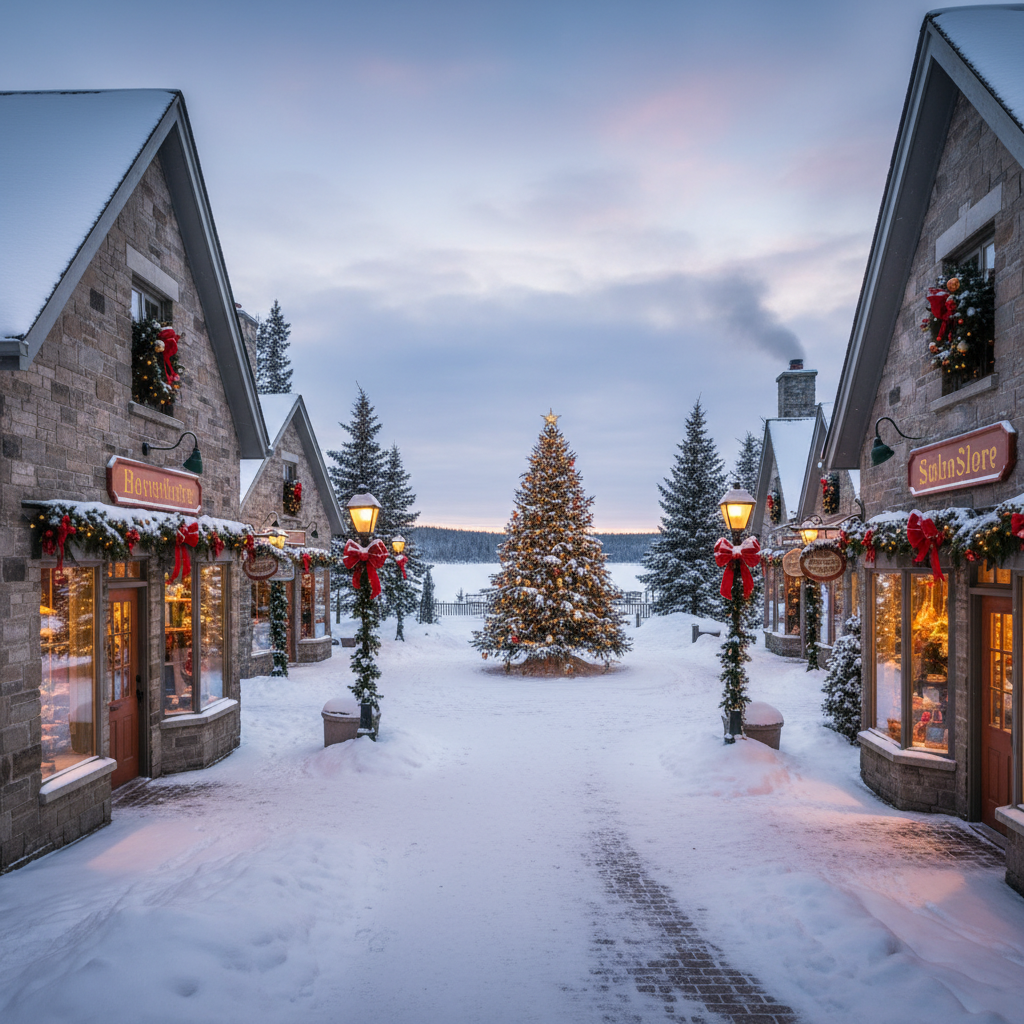
The village at the base of Blue Mountain is an integral part of the ski experience. Built in a pedestrian-friendly European style, it includes hotels, restaurants, shops, and entertainment venues arranged around a central plaza. After a day on the hill, the village comes alive with apres-ski energy. Outdoor fire pits, live music, and a steady flow of people moving between restaurants and shops create an atmosphere that extends the winter day well into the evening.
Dining in the village ranges from casual pub fare and pizza to more refined options. The restaurant scene has improved considerably in recent years, with several newer additions raising the bar. Shopping in the village focuses on outdoor gear, resort wear, and gifts, with a few specialty food shops rounding out the mix. The village is also the base for non-ski winter activities, including the outdoor skating path, snowshoeing, and tubing.
Beyond Blue Mountain
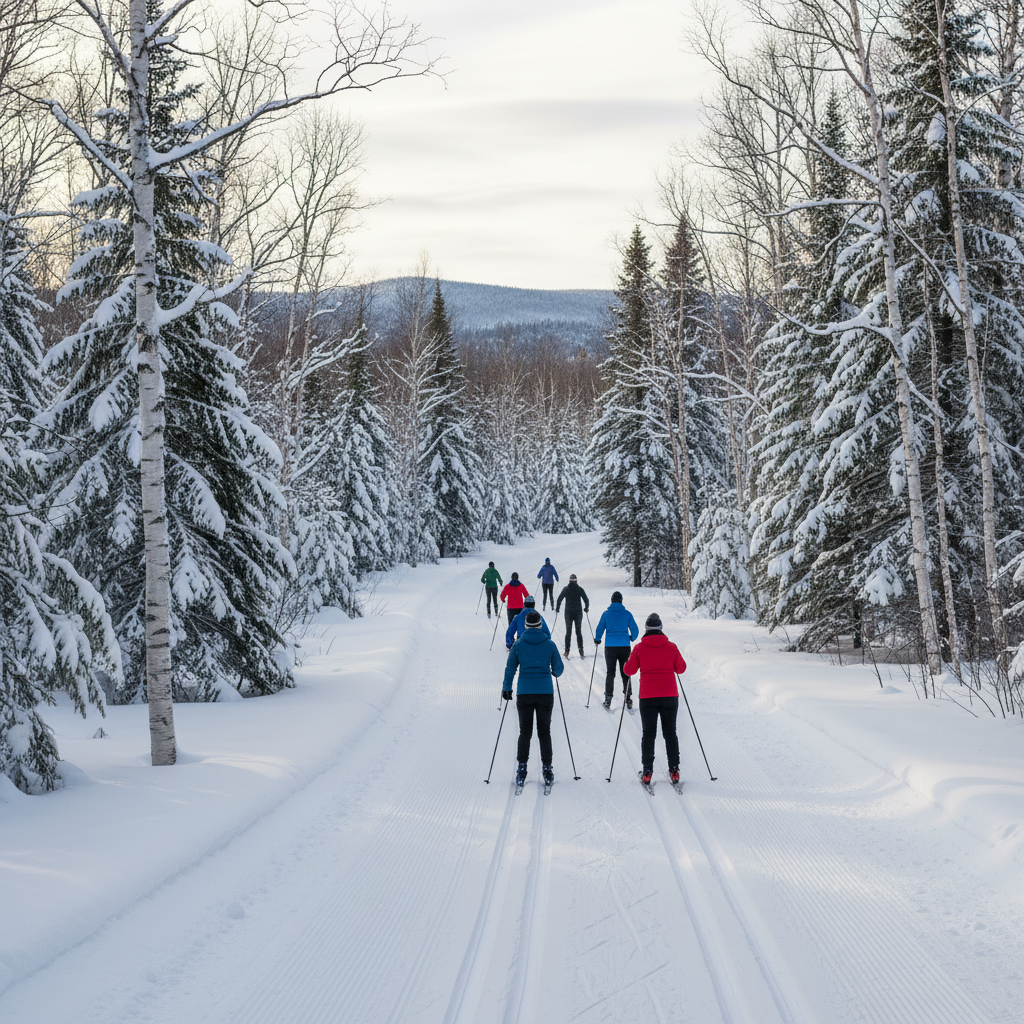
Blue Mountain is the main event, but it is not the only winter option in the area. Cross-country skiing has a strong following here, with groomed trail networks at Highlands Nordic, Scenic Caves Nature Adventures, and Craigleith Provincial Park. The terrain at Highlands Nordic is particularly good, with challenging climbs and descents through the escarpment forest. Scenic Caves offers a more accessible cross-country experience along with its snowshoeing trails and the winter suspension bridge walk.
Fat biking has grown quickly as a winter activity, with dedicated trails at Blue Mountain and in the surrounding area. Snowshoeing is available on multiple trail systems, including sections of the Bruce Trail that are accessible in winter. Ice fishing on Georgian Bay and nearby lakes draws a dedicated following, though conditions vary from year to year.
Getting Here
Blue Mountain Resort is about a 90-minute drive from Toronto via Highway 400 and Highway 26. The drive is straightforward in good weather but can be slower during snowstorms, particularly on the stretch of Highway 26 between Stayner and Collingwood. Checking road conditions before heading out is always a good idea in winter. Once in Collingwood, the resort is a 10-minute drive west of the downtown core.
For a broader look at winter and summer activities in the area, see the outdoor recreation guide. Information about Blue Mountain Village attractions beyond skiing is covered in the attractions guide.